
Bizigo Corporate Travel Management
Project overview
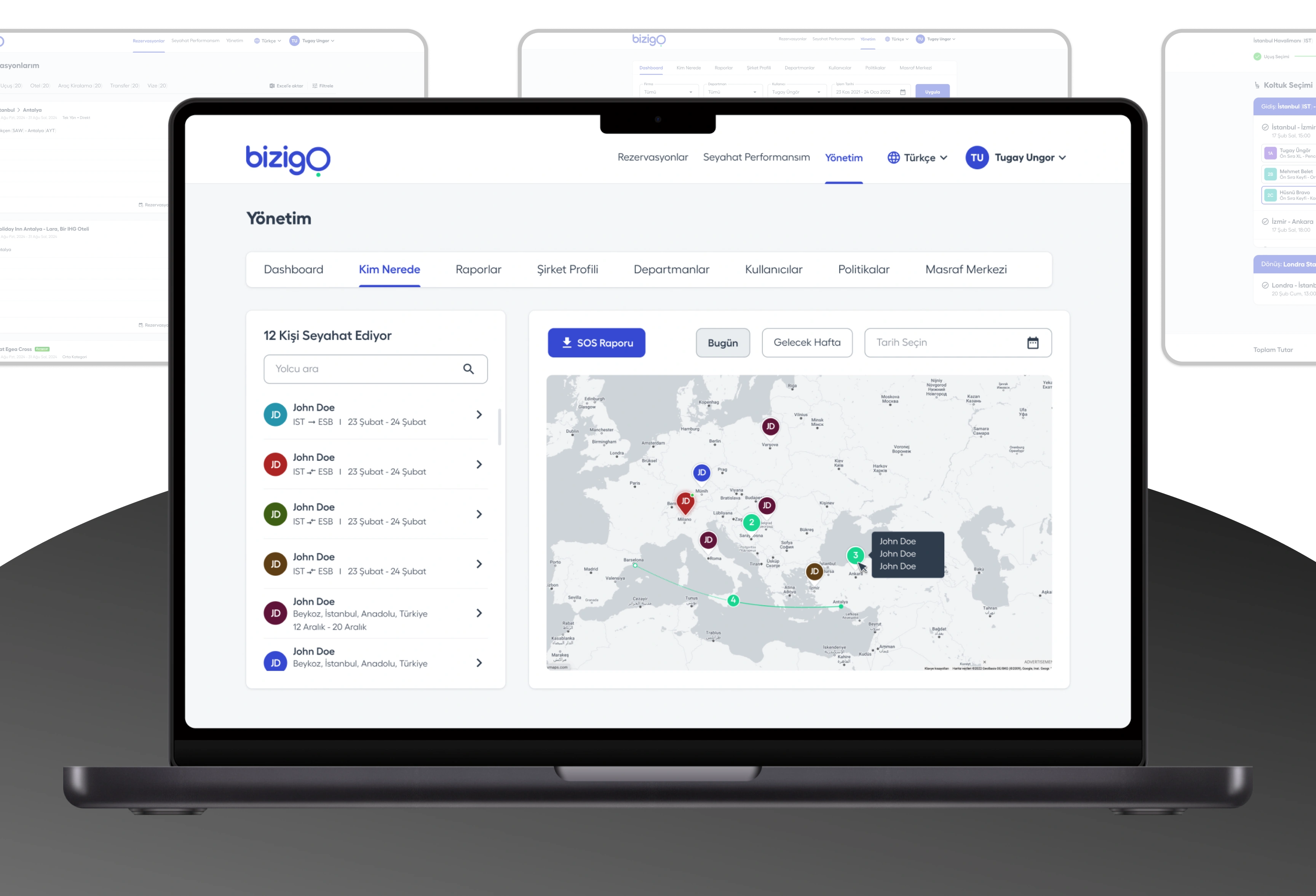
Bizigo is a corporate travel management platform that brings booking, traveler operations and administrative workflows into a single product.
I redesigned the platform end-to-end across desktop and responsive web, covering travel services such as flights, hotels, car rentals, transfers and events, as well as management experiences including dashboards, reporting and traveler visibility.
I collaborated closely with the project owner on UX decisions and product flows while owning the interface design, interaction patterns and reusable UI component system. The core redesign was completed across 2021–2022, and I have continued to evolve the product as its business requirements and operational capabilities have expanded.
The Challenge
Bizigo serves both travelers completing bookings and corporate teams managing travel operations, creating two very different sets of needs within the same product.
The redesign needed to support multiple travel services — including flights, hotels, car rentals, transfers and events — while also handling administrative workflows such as reporting, traveler visibility, policy information and operational management.
The challenge was to reduce the complexity of these workflows and create a more consistent product experience without removing the depth and flexibility required by corporate travel users.
My Contribution
As the sole Product Designer, I worked across the redesign from booking flows and information-heavy administrative experiences through to the final interface and responsive behavior.
I collaborated with the project owner on UX decisions, workflow requirements and product structure, then translated those decisions into clear user flows, interaction patterns and interface solutions.
I also created and maintained the reusable UI components and shared patterns used throughout the platform, helping establish consistency across booking, management, reporting and operational experiences.
Following the core redesign in 2021–2022, I continued to design new features and improvements as Bizigo evolved.
01 — Search and Decision-Making
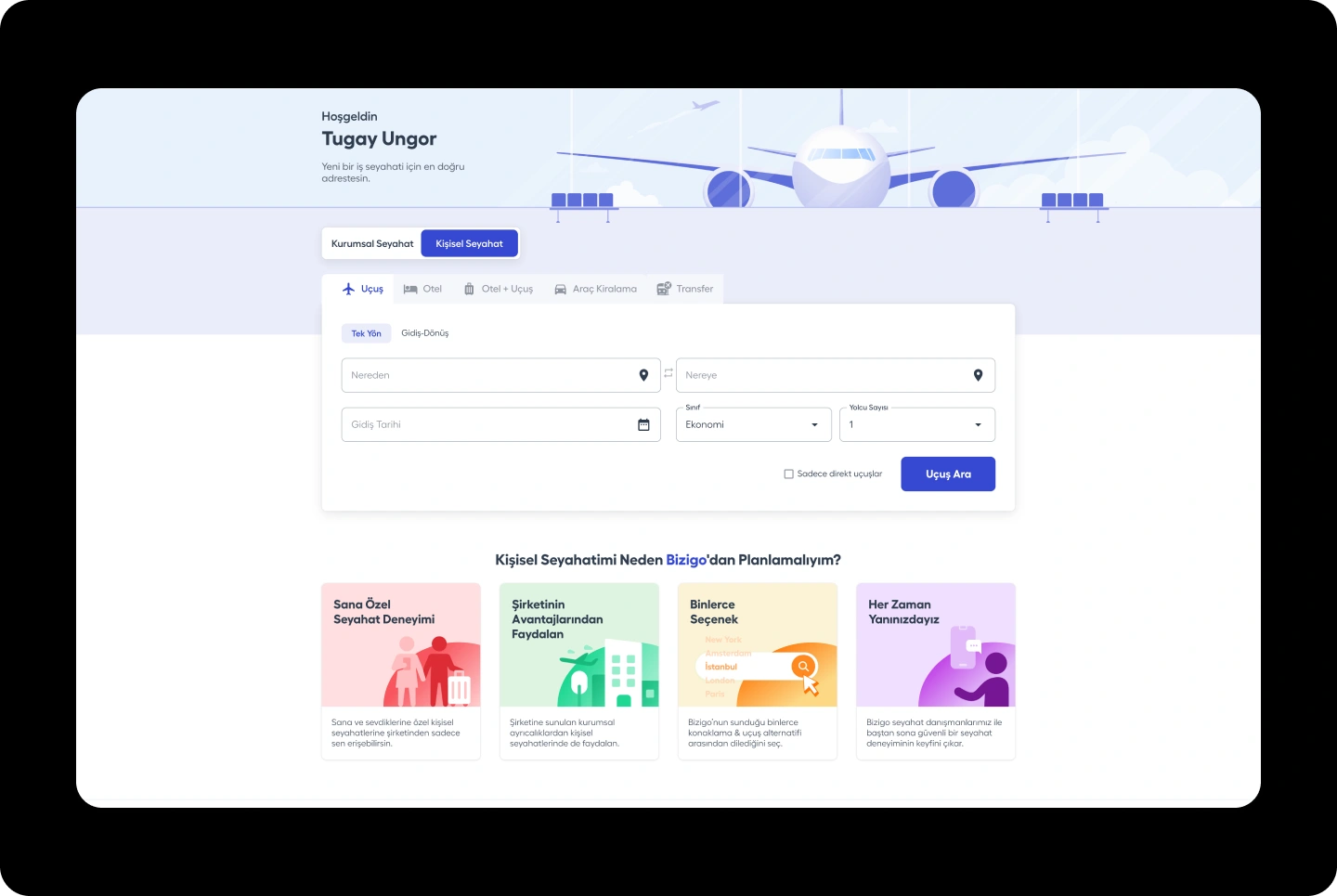
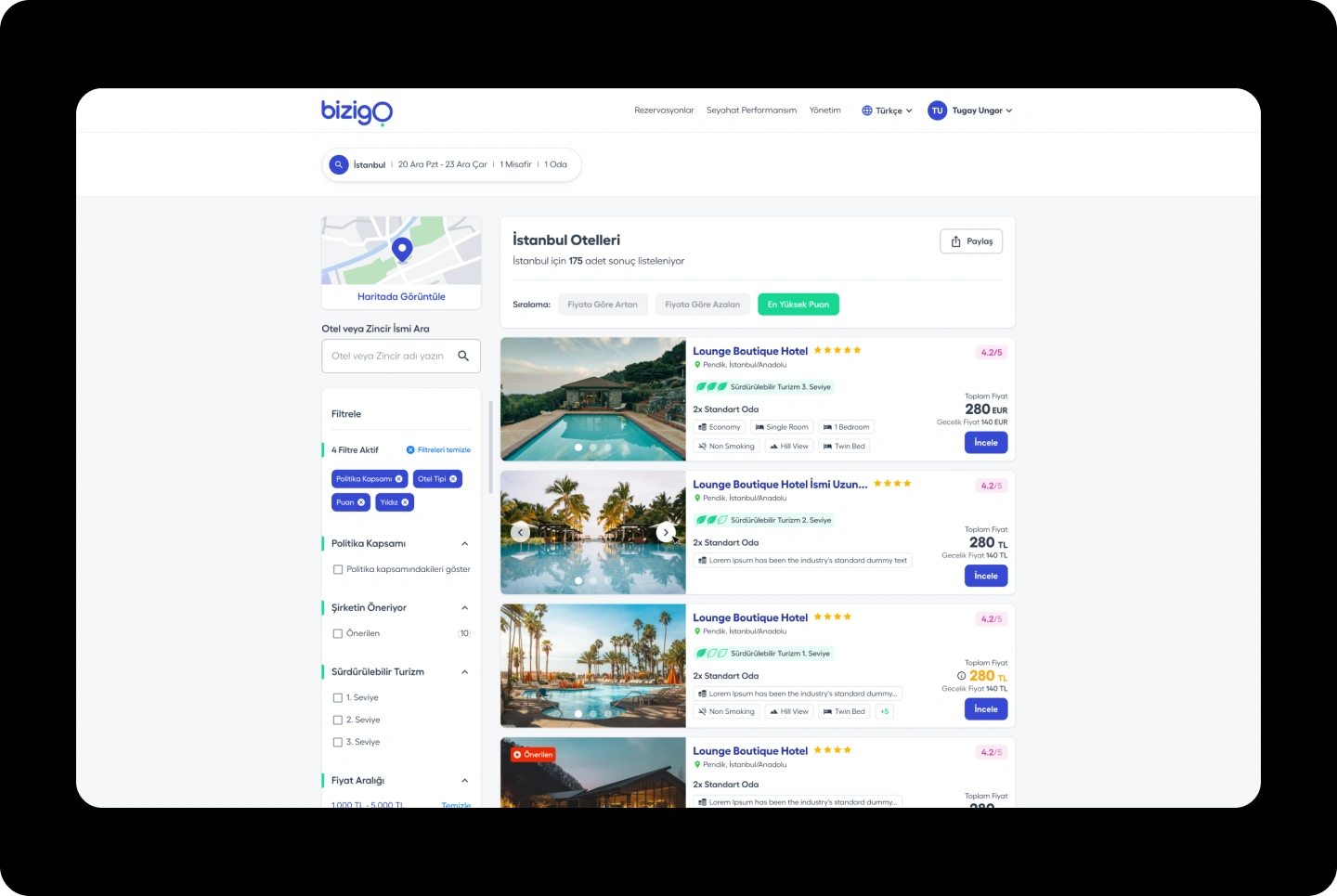
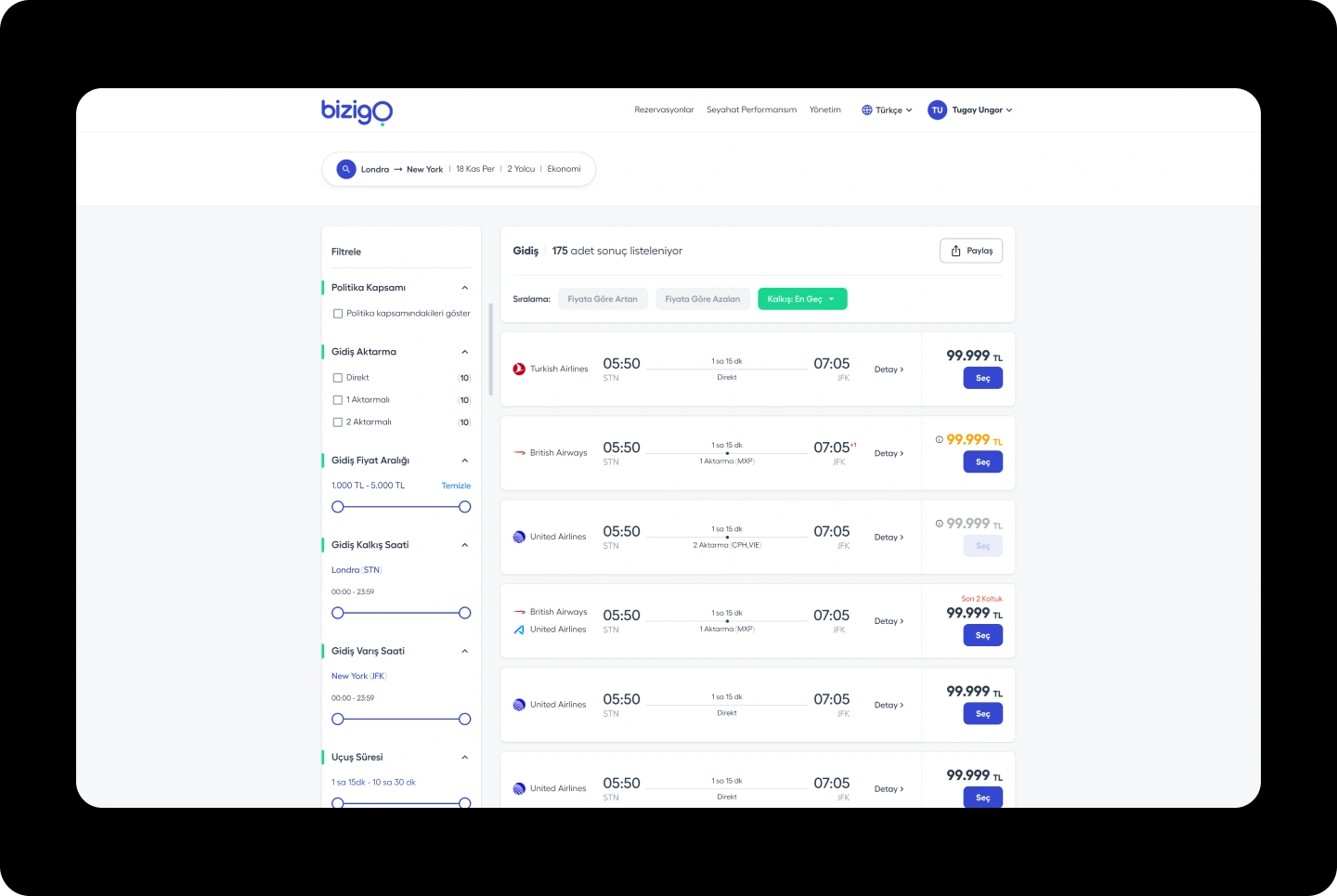
Corporate travelers need to move quickly from search to comparison while considering more than price alone.
I structured search and listing experiences to surface the information needed for each decision, including itinerary details, availability, pricing, filters and corporate policy indicators.
Although flights, hotels and other travel services have different comparison models, shared layout and interaction patterns help the experience remain familiar as users move between products.
02 — Managing Corporate Travel
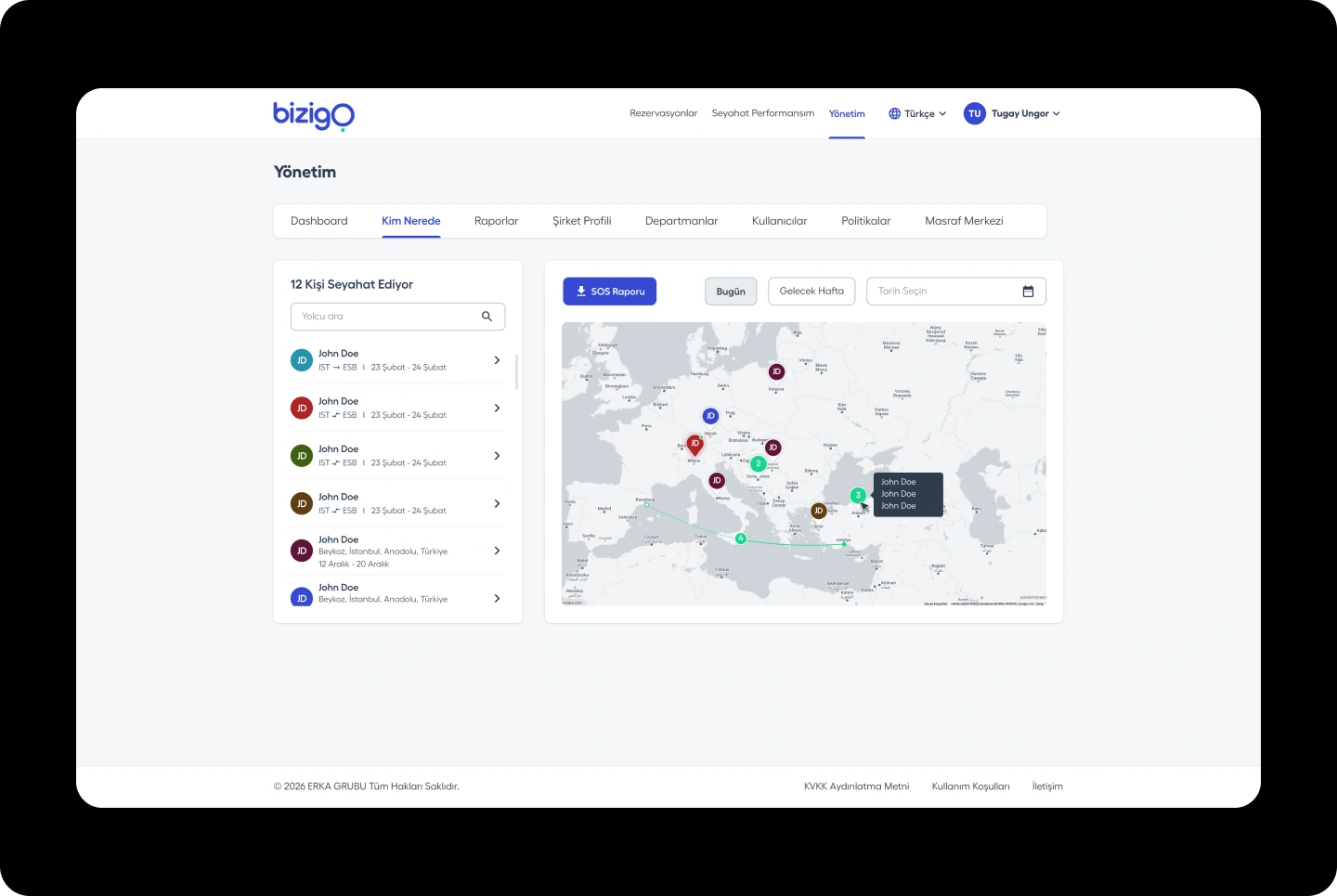
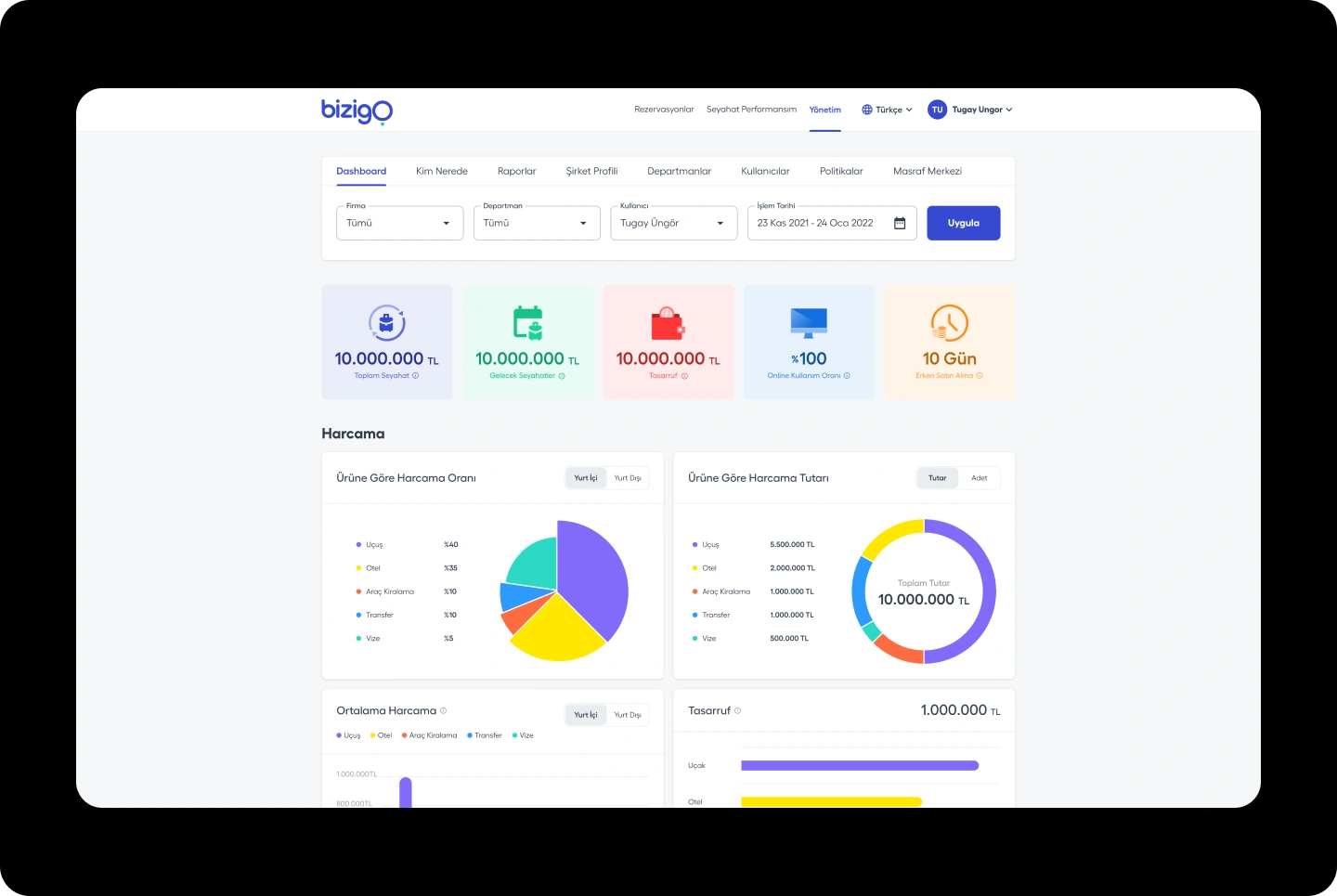
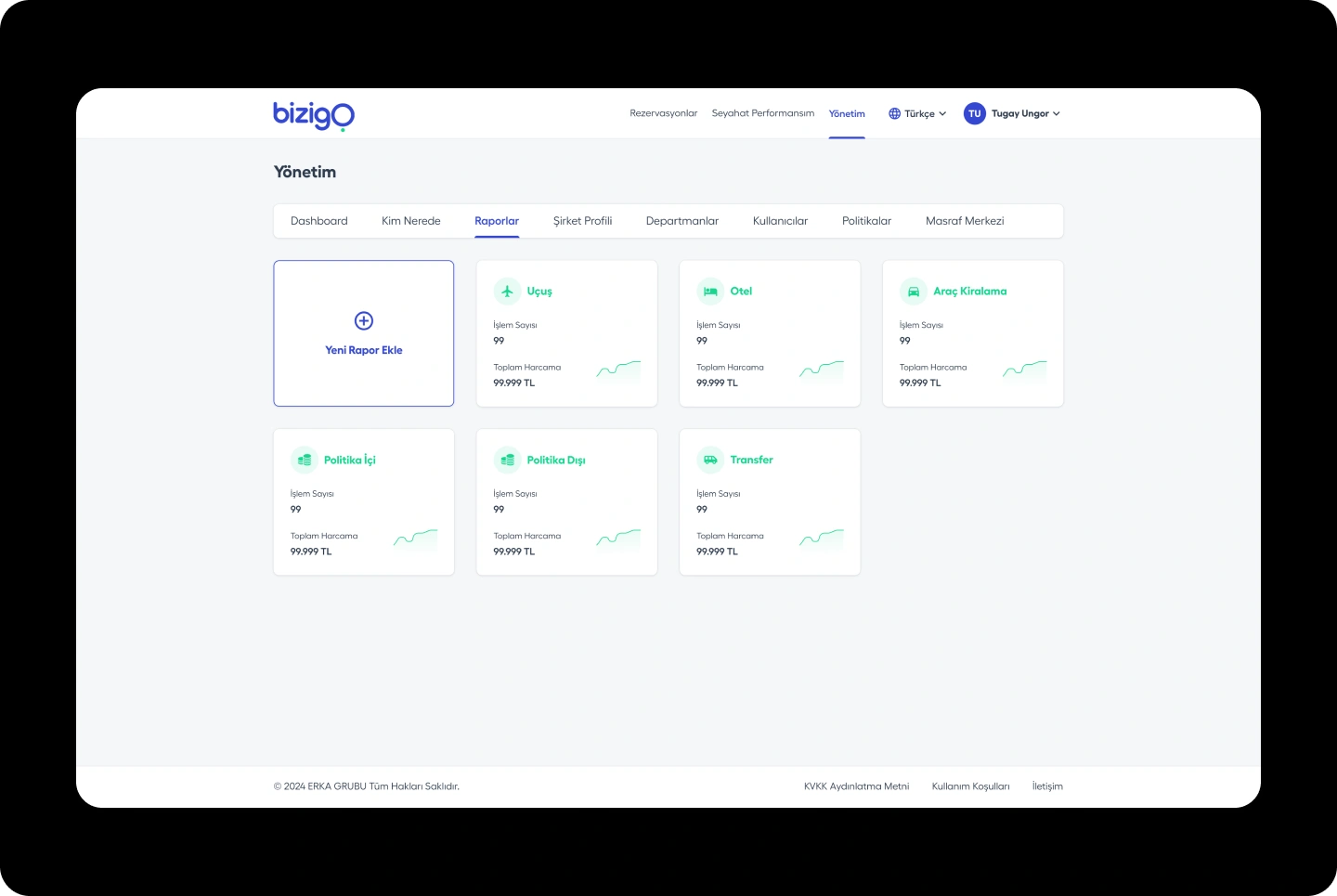
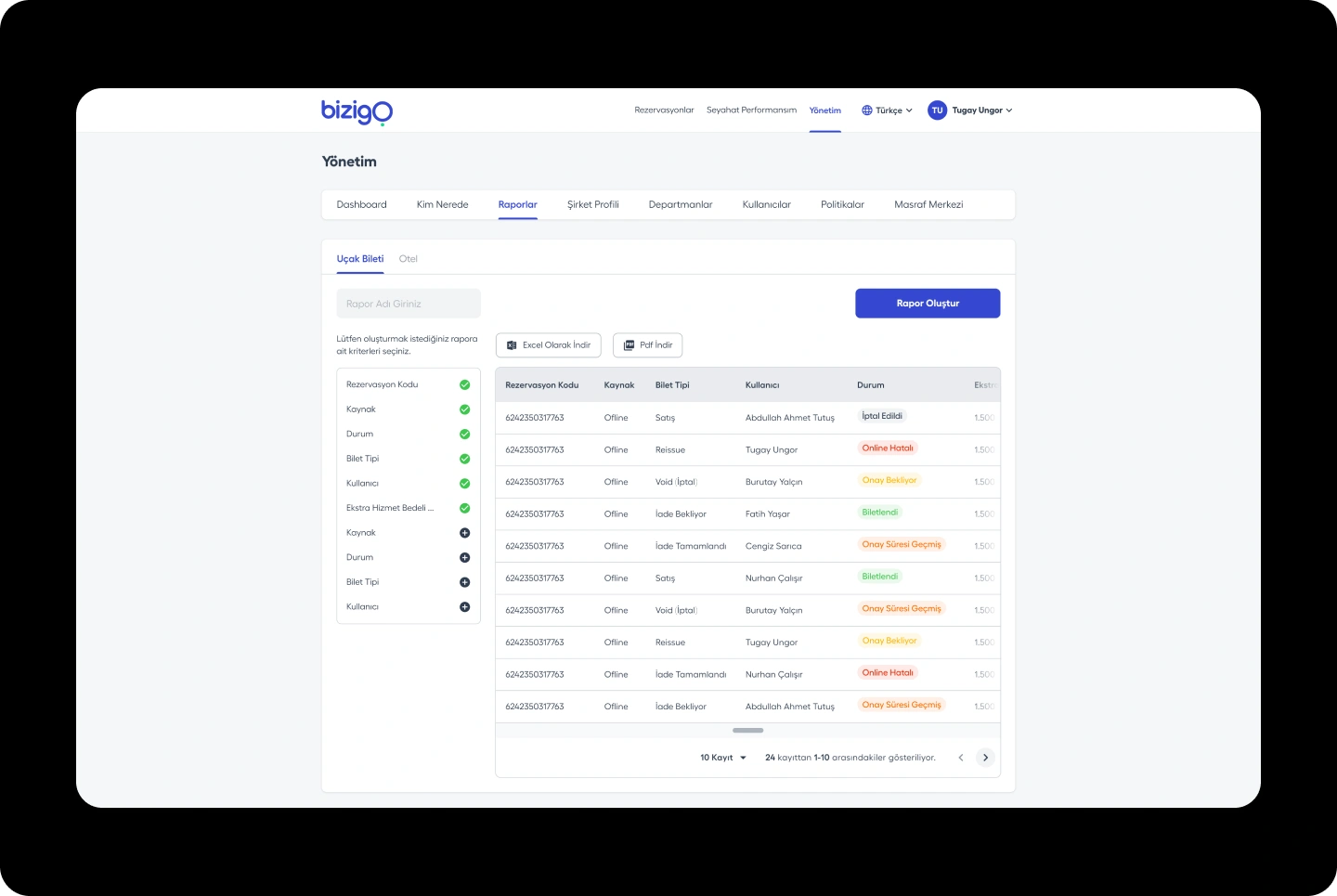
Bizigo extends beyond booking by giving corporate travel teams visibility into what is happening across their organization.
Dashboard, reporting and traveler-location experiences were designed to make information such as travel activity, spending, savings, policy compliance and active journeys easier to understand and manage.
The key design challenge was organizing dense operational data into clear summaries while still allowing users to access the level of detail required for day-to-day travel management.
03 — Configuring the Journey
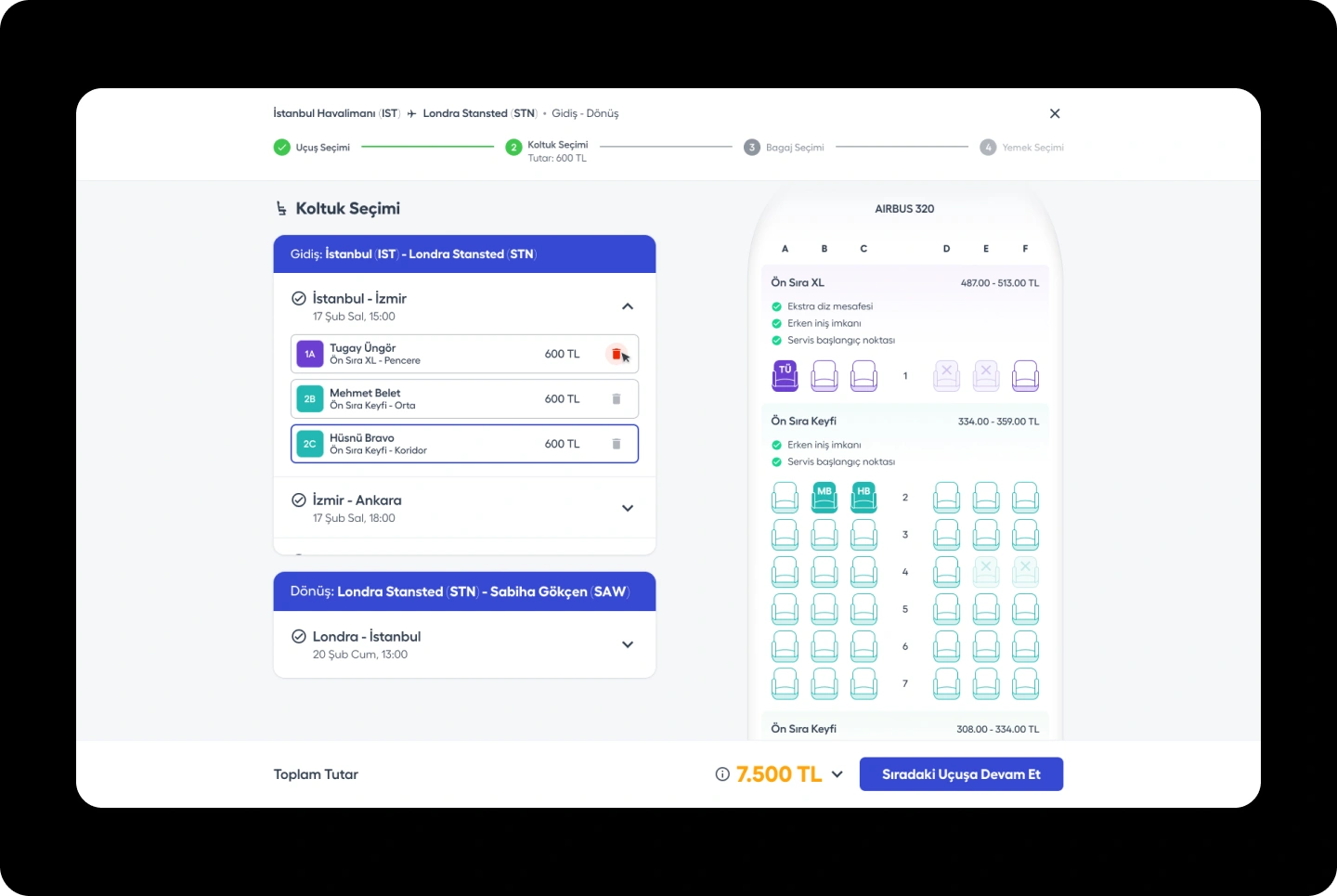
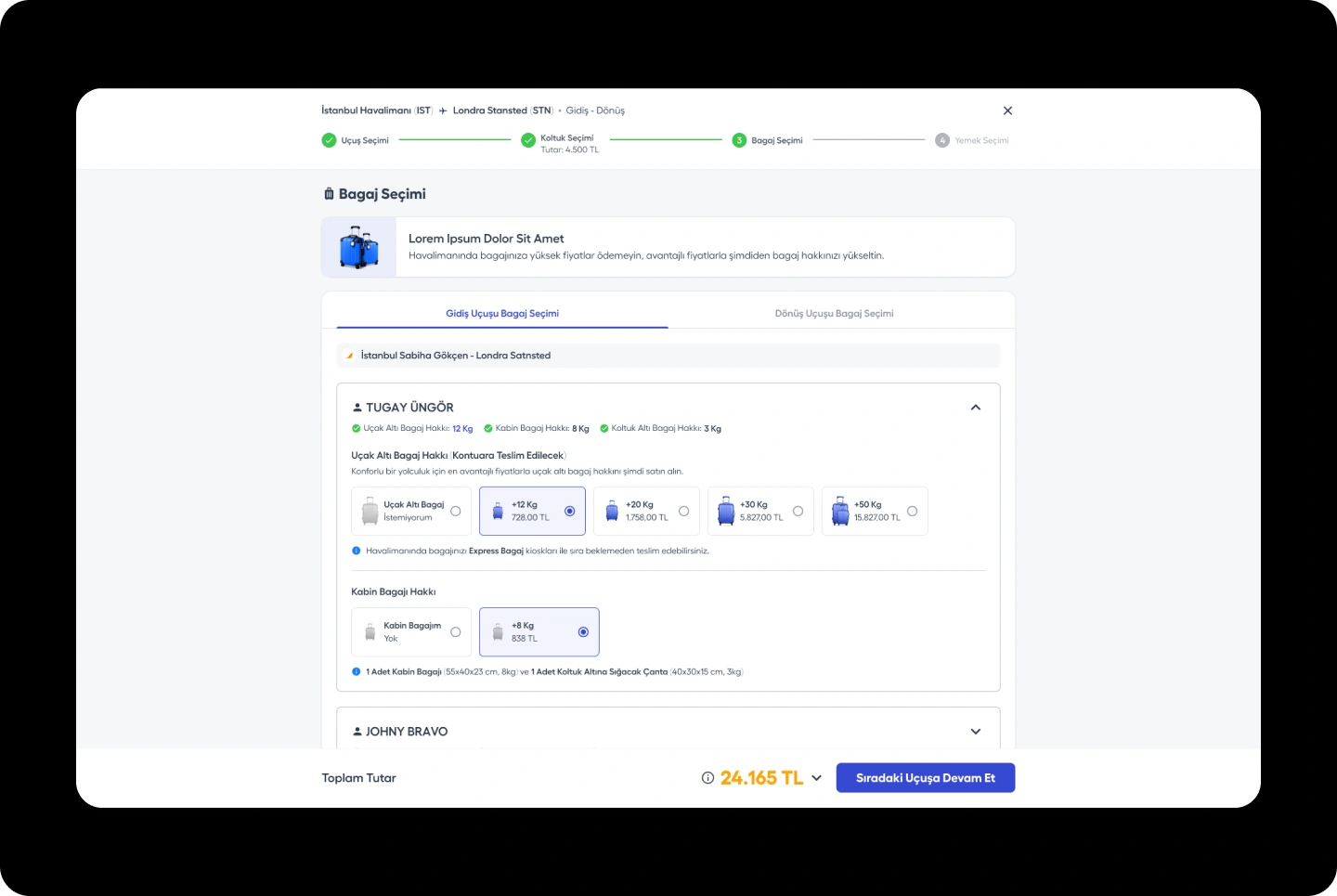
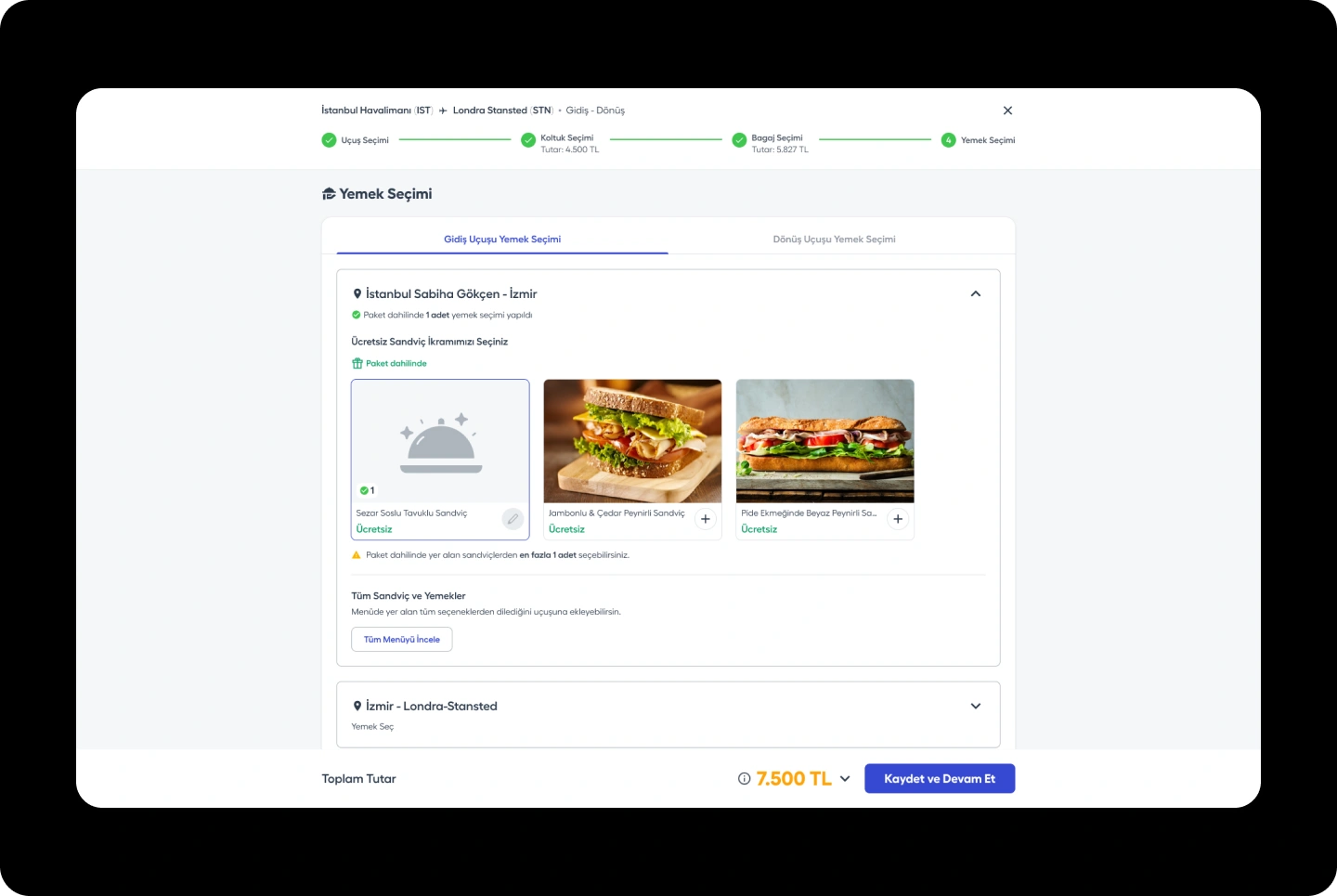
A corporate flight booking does not end with selecting an itinerary. Travelers may also need to manage seats, baggage, meals and other journey-specific services.
I designed these experiences as connected steps within the wider booking flow, keeping passenger assignments, availability, included services and additional costs visible throughout the process.
Consistent patterns across these steps help users understand where they are in the journey while still supporting the specific requirements of each service.
04 — Booking and Reservation Management
The experience needed to remain useful after a traveler completed the initial search and selection process.
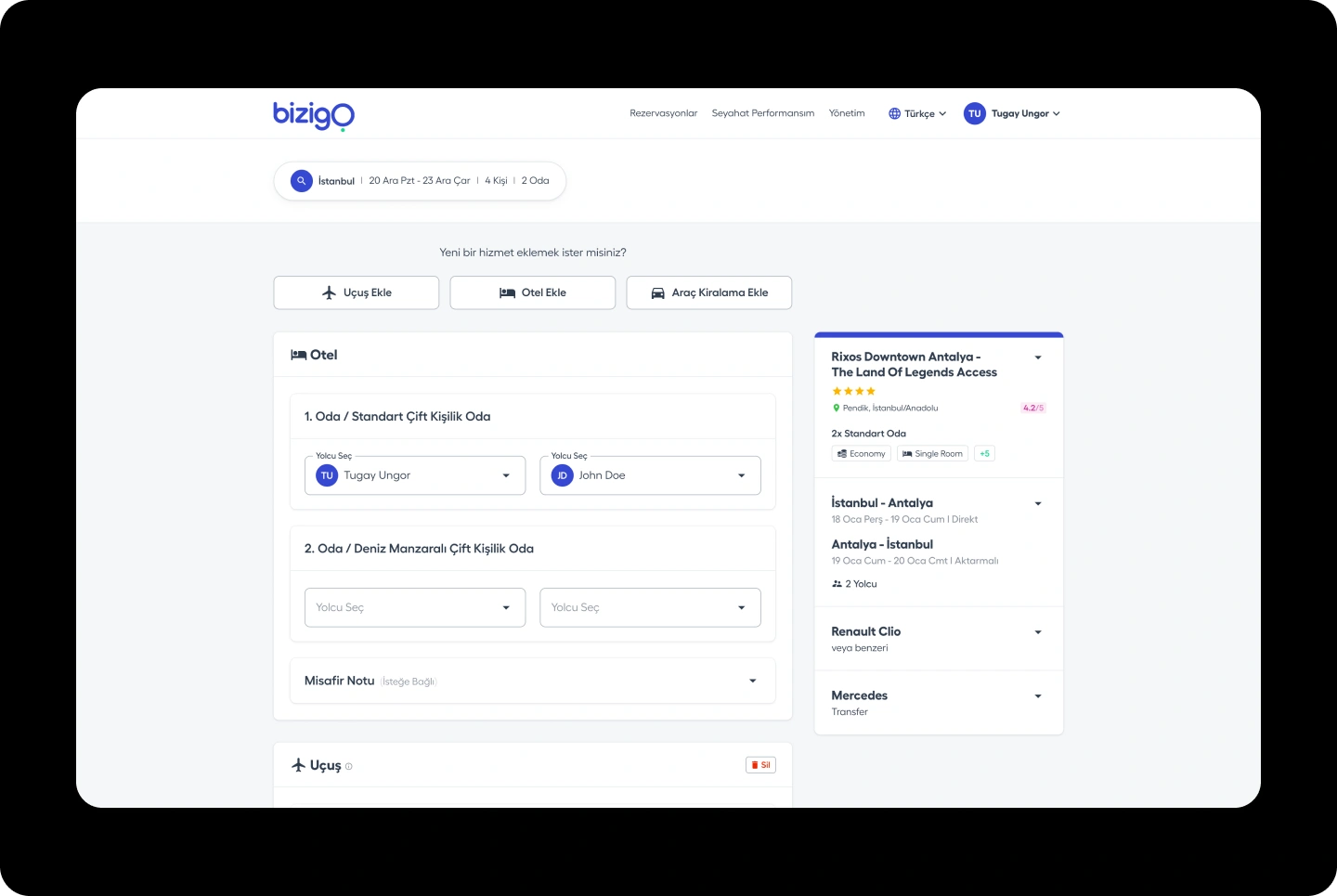
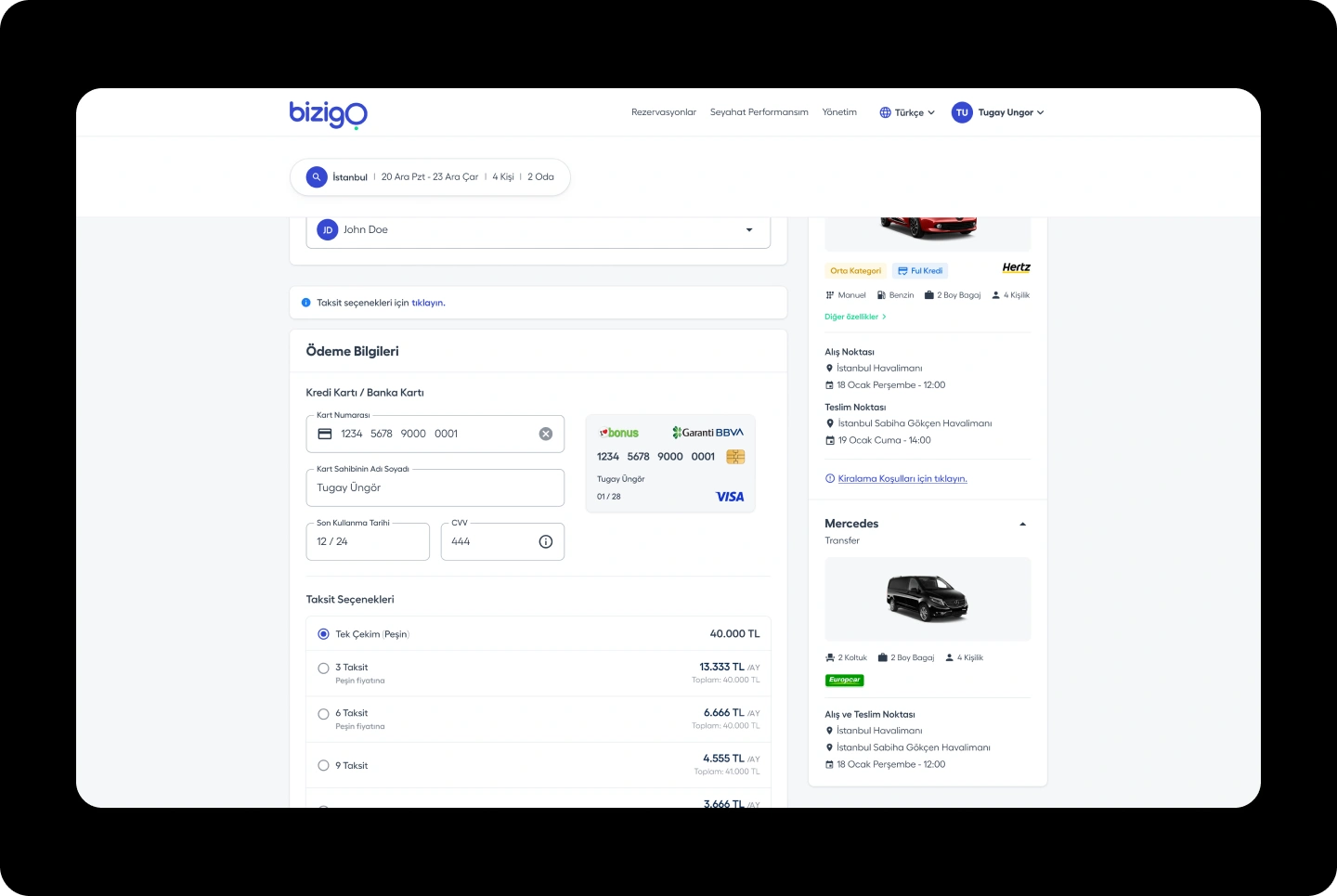
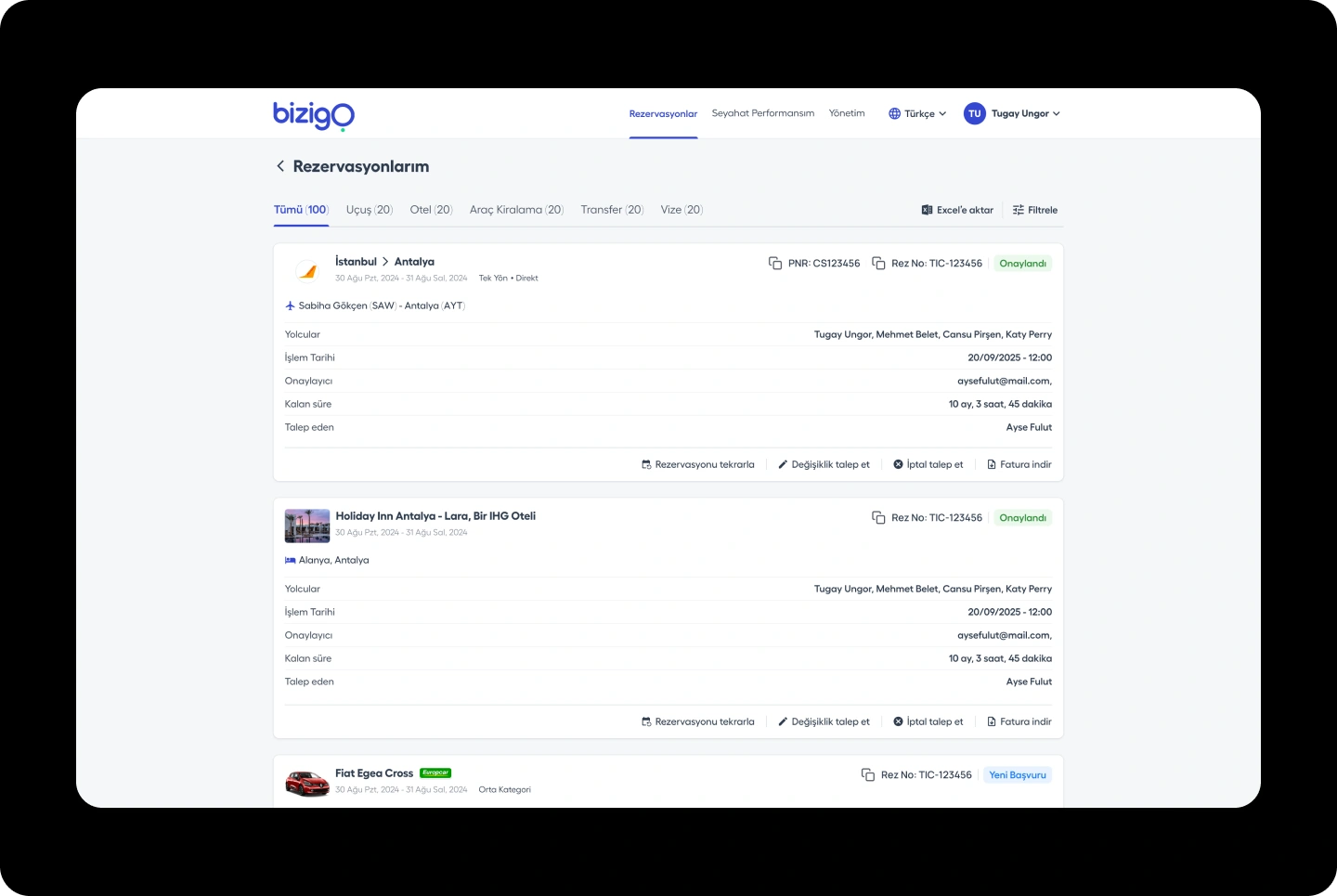
I designed booking review, payment, reservation details and post-purchase management experiences to bring itinerary information, traveler assignments, costs and available actions into a clear structure.
This allows travelers and travel managers to review and manage multiple services within the same journey without losing context between booking and post-booking workflows.
05 — Responsive Booking Experience
Many of Bizigo’s workflows contain dense information, complex forms and multiple actions that were originally designed around desktop use.
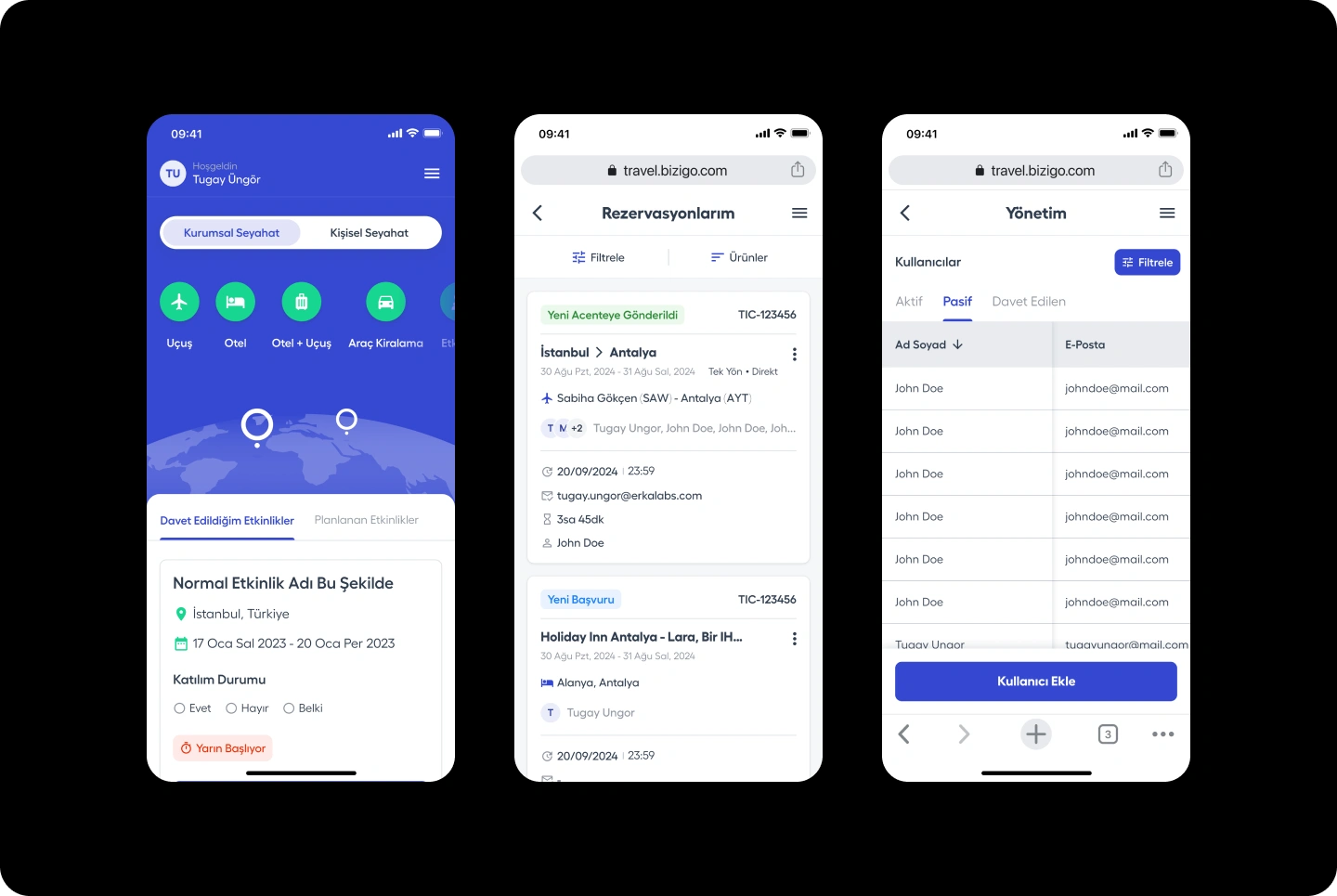
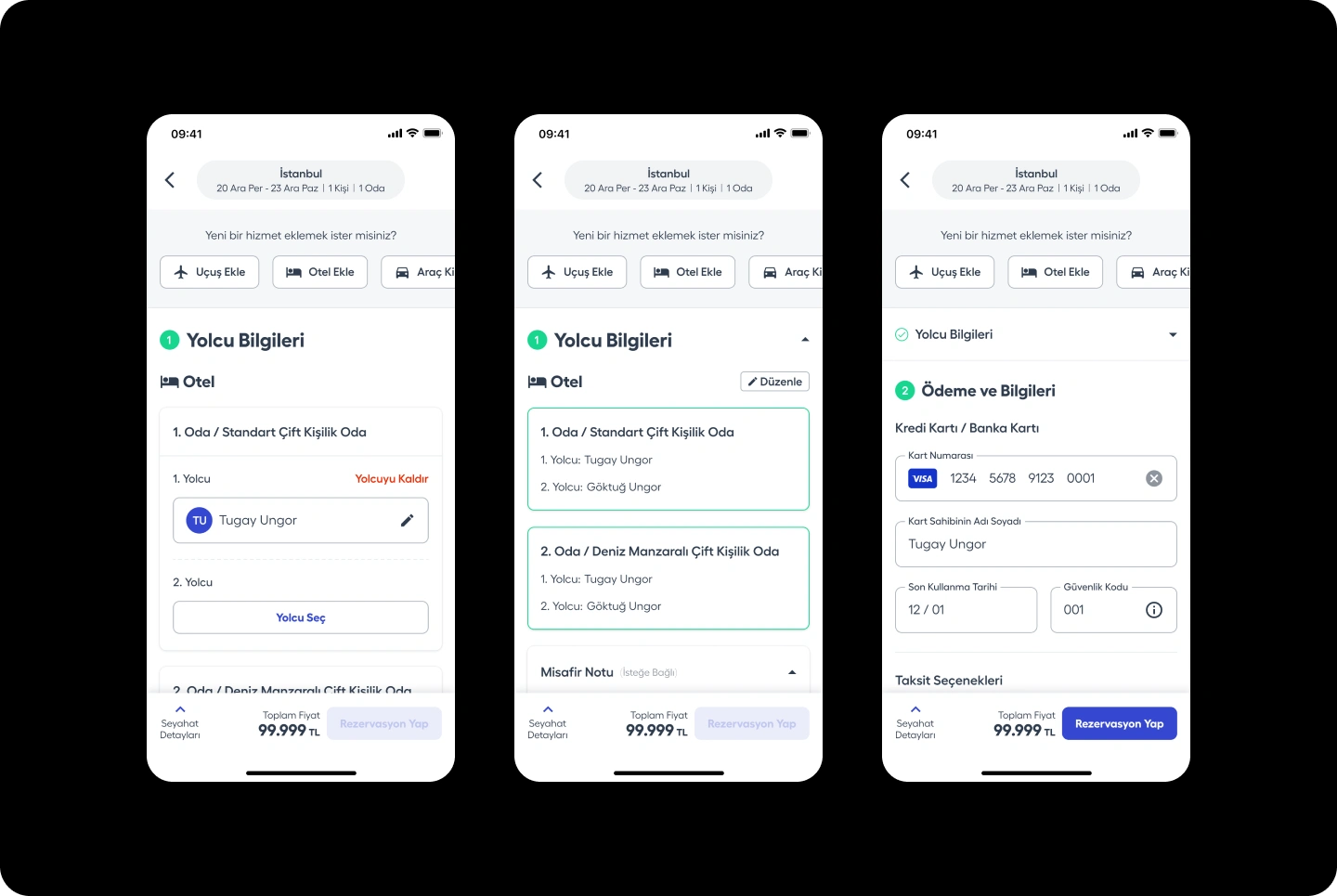
For responsive experiences, I reorganized content hierarchy, form structures, booking summaries and primary actions to preserve the information users needed while making each step manageable on smaller screens.
Rather than simply reducing the desktop interface, the responsive layouts adapt the same workflows to the constraints and interaction patterns of mobile devices.
Outcome
The redesign established a more consistent foundation across Bizigo’s booking, administrative and operational experiences.
Shared interaction patterns and reusable UI components made it possible to support different travel products and management workflows within the same product language, while maintaining the flexibility required by corporate travel.
The core redesign was completed across 2021–2022, but the platform has continued to evolve since then. The design foundation created during the redesign has supported ongoing additions and improvements as new business and operational requirements have emerged.